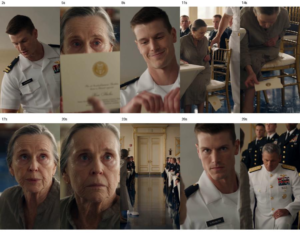
He Humiliated an Elderly Navy Mother—Then the Admiral Revealed the Truth
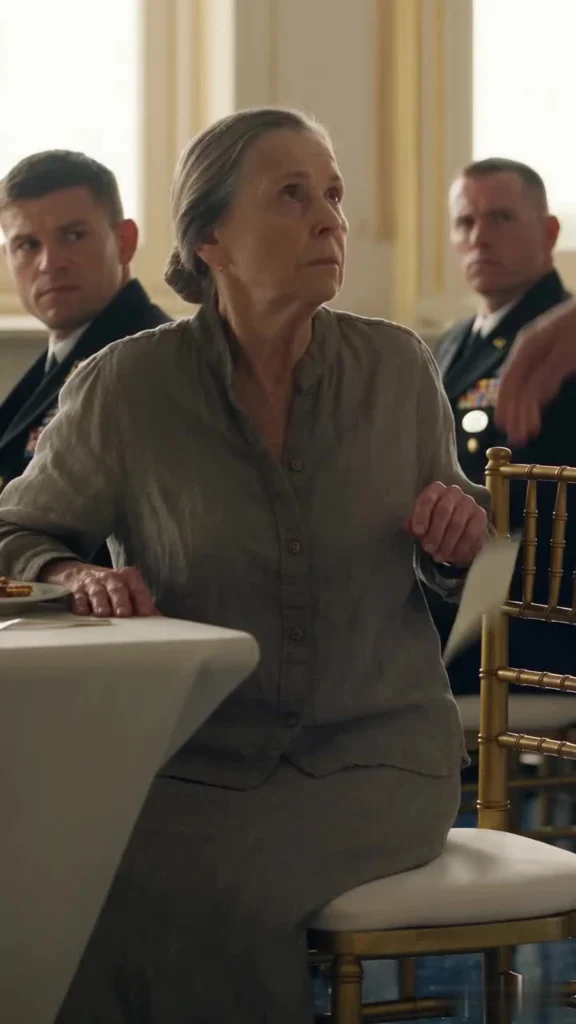
He Humiliated an Elderly Navy Mother—Then the Admiral Revealed the Truth
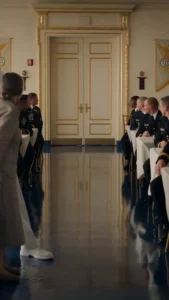
The room fell silent when Lieutenant Mason Cole told the elderly woman to leave the front table.
“You’re in the wrong place, ma’am,” he said, keeping his voice low enough to sound professional but loud enough for the nearby guests to hear.
The woman looked at the name card in front of her.
EVELYN ROSS — HONORED FAMILY GUEST.
“I believe my seat is here,” she replied.
Mason glanced at her plain gray dress and worn shoes. He had spent the entire morning preparing the Navy’s formal remembrance ceremony, and the last thing he wanted was an unexpected problem in front of senior officers.
“Everyone has been given a designated place,” he insisted. “You need to move.”
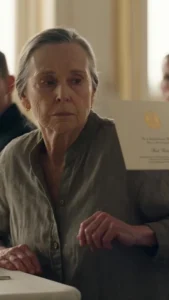
Evelyn reached into her handbag and took out her invitation.
Mason barely looked at it.
“I can’t accept every piece of paper someone brings to the door.”
Then, before she could explain, he snatched the card and tore it.
The sound was small, but the silence that followed made it seem enormous.
A few guests looked away. Others watched without speaking.
Evelyn stared at the two halves in his hand.
“I was told to come here,” she said quietly.
“And I’m telling you to leave.”
He pulled a chair away from the table, knocking a glass of water onto the floor. The spill spread across the polished surface, soaking the hem of her dress.
For a moment, Evelyn closed her eyes.
She had spent years receiving difficult news from men in uniform. She had learned how to stand still when the world around her seemed to collapse.
But she had never expected to be treated like a trespasser at a ceremony intended to honor military families.
“Please,” she said, “check with the event coordinator.”
Mason shook his head.
“I know how this works.”
That was his mistake.
He believed knowing the procedure meant understanding the people the procedure was supposed to serve.
He had not noticed the doors opening at the far end of the hall.
He had not noticed the senior officers standing.
And he had certainly not noticed the rear admiral walking directly toward them.
Chapter 1: The Arrival That Changed Everything
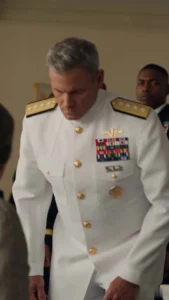
Rear Admiral Thomas Mercer entered the hall with several members of a recently returned naval recovery team.
Their uniforms were immaculate, but exhaustion showed in their faces. One sailor carried an old field notebook. Another walked with a slight limp.
The admiral was expected to proceed to the podium.
Instead, he crossed the room toward the front table.
Mason stepped aside, relieved that someone senior had arrived to resolve the disturbance.
“Admiral, sir,” he began. “I was just removing an unauthorized guest—”
Mercer did not answer.
He stopped in front of Evelyn and looked at the torn invitation in her hand. Then he noticed the water on the floor and the chair Mason had moved away from the table.
The admiral’s expression changed.
“Mrs. Ross?”
Evelyn straightened.
“Yes, sir.”
For several seconds, Mercer seemed unable to find the words he wanted.
Then he removed his cap and lowered himself onto one knee in front of her.
The entire room went still.
“Mrs. Ross,” he said, his voice heavy with emotion, “we finally brought Andrew home.”
Evelyn’s hand tightened around the invitation.
“Andrew?” she whispered.
Mercer nodded.
Behind him, two sailors carefully carried a flag-draped memorial case toward the table.
A brass nameplate caught the light.

ANDREW ROSS.
Evelyn reached for the edge of the table to steady herself.
For months, she had lived between hope and fear. Her youngest son had disappeared during an overseas operation, and every official update seemed to offer another carefully worded reason to keep waiting.
Now the waiting was over.
But the answer had arrived in a form no mother ever wants to receive.
Mason stood motionless.
He had believed he was correcting a seating mistake. He now understood that he had interrupted a family’s most painful moment.
The admiral rose and turned toward him.
“Lieutenant, did you verify Mrs. Ross’s invitation?”
Mason swallowed.
“No, sir.”
“Did you contact the coordinator?”
“No, sir.”
“Did you give her an opportunity to explain?”
Mason looked at the torn paper.
“No, sir.”
Mercer’s voice remained controlled.
“Then you did not resolve a security issue. You made a judgment about a person without checking the facts.”
Mason had no answer.
Chapter 2: The Mother Behind the Name
Evelyn had raised three sons.
Daniel, the oldest, had been quick to laugh and quicker to defend anyone he believed was being treated unfairly. He joined the military as a young man and died during an operation in which members of his unit were brought to safety.
Michael followed years later. He was quieter than Daniel, the sort of person who repaired a broken cupboard without telling anyone and remembered every birthday in the family.
He, too, died while serving.
Andrew, the youngest, had tried to reassure his mother that his brothers’ stories would not become his own.
“I’m not them, Mom,” he once told her.
“I know,” Evelyn replied. “That doesn’t mean I won’t worry.”
He had smiled, taken her hand, and promised to call whenever he could.
For years, he kept that promise.
Then came the operation from which he never returned.
The Navy searched for him, but the circumstances made recovery difficult. Evelyn received official notices, occasional updates, and long stretches of silence.
She kept Andrew’s last photograph on the mantel beside those of his brothers.
She did not need a ceremony to remember them.
Still, when the invitation arrived, she accepted it. The letter said the event would recognize families connected to a difficult recovery mission. She wondered whether it meant someone had finally found Andrew.
She had dressed carefully that morning, choosing a simple outfit rather than buying something new. The invitation had told her where to sit, so she followed the instructions.
She never imagined that a stranger would decide she did not belong.
Now, standing beside the memorial case, she looked at Admiral Mercer.
“Can you tell me what happened to my son?”
“Yes, ma’am,” he answered. “I will explain everything we are able to share. You deserve a clear account, not another series of unanswered questions.”
Evelyn nodded.
“That is all I have wanted.”
Chapter 3: The Seven Men Who Came Back
Mercer introduced the members of Andrew’s team.
Their leader, Chief Aaron Nolan, stepped forward. He had known Andrew for years and carried himself with the restraint of someone trying to keep a difficult memory under control.
“Mrs. Ross,” he said, “your son was the reason we made it out.”
Evelyn looked at him.
“Tell me what you can.”
Nolan explained that their evacuation had gone wrong. The route they expected to use was no longer safe, and several team members were injured. Andrew stayed behind long enough for the others to reach a safer position.
The team had not abandoned him. They had searched, returned to the area when conditions permitted, and continued pressing for a recovery effort.
Eventually, a later mission reached the location where he had been lost.
“We carried him ourselves,” Nolan said.
Evelyn looked at the men standing before her.
“All of you?”
“Yes, ma’am.”
She studied their faces, recognizing the exhaustion and grief that words could not fully explain.
“Then you must be tired,” she said. “Please sit down.”
Nolan looked surprised.
“Ma’am, this is your ceremony.”
“It is a room full of chairs,” Evelyn replied. “You don’t have to stand just because I am hurting.”
A few of the men lowered their heads. One gave a short, broken laugh.
For the first time that afternoon, the tension in the room eased.
Evelyn asked about Andrew’s final days, his jokes, and the small habits his teammates remembered. Nolan told her how Andrew used to leave notes in the team’s shared notebook—some serious, most ridiculous.
“He once wrote a reminder that we needed to fix the kitchen faucet at your house,” Nolan said.
Evelyn blinked.
“He remembered that?”
“He made me promise I’d check it when we got home.”
For a moment, Evelyn almost smiled.
“That sounds like Andrew. He could be facing the end of the world and still worry about a dripping tap.”
The men laughed softly. The sound did not erase the grief, but it gave everyone permission to breathe.
Chapter 4: The Apology That Could Not Undo the Damage
While the family and team spoke, Mason was taken aside by Captain Rebecca Sloan, the officer responsible for reviewing the incident.
She asked him to explain what had happened.
He started with the guest list, the timing, and the pressure of preparing for a high-profile ceremony.
Sloan listened until he finished.
“Now tell me what you actually did.”
Mason paused.
“I saw an elderly woman seated at a reserved table. I assumed she wasn’t authorized. I didn’t verify her invitation. I tore it, and I touched her arm to make her move.”
“Why?”
“I thought I was protecting the event.”
“Did you have evidence that she posed a threat?”
“No, ma’am.”
“Did she refuse a reasonable instruction after you verified her identity?”
“No.”
“Then what were you protecting?”
Mason looked down.
He knew the answer, and it was not one he wanted to say aloud.
“Appearances,” he admitted.
Sloan folded her hands.
“Your duty is to protect people and uphold standards. It is not to decide who deserves courtesy based on how they look.”
Mason was removed from ceremonial duties while the incident was reviewed. He was required to submit a written account and take responsibility for his conduct.
He was also told not to approach Evelyn unless she agreed to speak with him.
That evening, he began drafting an apology.
The first version explained the pressure he had been under.
He deleted it.
The second described how ashamed he felt.
He deleted that one, too.
He finally understood that his feelings were not the center of the story. Evelyn had suffered the insult; she did not owe him comfort because he regretted it.
His final letter was short.
He acknowledged that he had judged her appearance, ignored her evidence, destroyed her invitation, and treated her with disrespect. He did not ask for forgiveness or excuse his actions.
He sent it through the proper channel and waited.
Chapter 5: The Letter From Another Generation
Several weeks later, Mason received an unexpected call from his mother.
During a conversation about the incident, he had mentioned Evelyn’s name and her sons. His mother recognized Daniel’s name immediately.
She told Mason that his late father, Robert Cole, had served alongside Daniel decades earlier.
Robert had rarely spoken about that deployment. He had returned home wounded, carrying memories he never knew how to discuss. His family understood that another serviceman had helped save him, but they had never known the man’s name.
Mason’s mother found an old photograph in a box of his father’s belongings. Four young servicemen stood beside an aircraft. Robert was one of them.
Daniel Ross stood beside him.
On the back, Robert had written the date and the names of the men in the photograph.
There was also an unopened letter addressed to Evelyn.
Mason’s mother explained that Robert had intended to send it years ago but had never found the courage. It described how Daniel had helped him reach the evacuation aircraft when the situation had become desperate.
The letter did not make Daniel’s death easier to understand. It did not restore the years Evelyn had spent waiting for her sons to return.
But it gave her a part of Daniel’s story she had never known.
Mason asked his mother to send the letter to Evelyn.
When it arrived, Evelyn read it slowly at her kitchen table. She ran a finger over the old handwriting and looked at the photograph for a long time.
She cried—not because the past had been repaired, but because someone had finally shared a piece of it honestly.
The letter also changed how Mason understood his own family. His father’s silence had not erased the sacrifice. It had only kept the truth from the people who needed to hear it.
Chapter 6: A Different Kind of Strength
Mason eventually requested permission to meet Evelyn and apologize in person.
She agreed.
When he arrived, he wore a simple uniform and carried no gift. He stood near the doorway until she invited him to sit.
“I read your letter,” she said.
“Yes, ma’am.”
“Why did you write it?”
Mason thought carefully before answering.
“At first, I was ashamed because I learned who you were. Then I realized that was the wrong reason. I should have treated you with respect before I knew anything about your family.”
Evelyn studied him.
“That is true.”
“I can’t undo what I did.”
“No,” she replied. “You cannot.”
He nodded, accepting the answer.
“I am sorry.”
Evelyn glanced at the photographs on her mantel.
“People often think respect is something they give to important people. But the real test is how they treat someone who cannot offer them anything in return.”
Mason lowered his eyes.
“I understand that now.”
“Understanding is a start,” Evelyn said. “What you do next is the part that matters.”
She did not offer him instant forgiveness. She did not tell him that one apology had erased the harm.
Instead, she asked him to become more careful with the authority he carried.
“If you see someone who looks out of place,” she said, “ask a question before you make a judgment. If you have rules to enforce, enforce them fairly. And if you are wrong, admit it before pride makes the damage worse.”
Mason promised to do his best.
This time, he did not say it as a way to end an uncomfortable conversation. He said it because he understood that his actions would be the only proof.
Chapter 7: The Ceremony They Remembered
Months later, the Navy held a smaller remembrance event for families and the members of Andrew’s team.
Evelyn arrived early.
At the entrance, a young officer checked her invitation carefully, confirmed her name with the coordinator, and thanked her for coming.
No one questioned whether she belonged.
At the front table, a place card carried her name. Beside it was a card honoring Andrew and the teammates who had returned.
A glass of water stood near an empty chair.
Evelyn looked at it for a moment before taking her seat.
Mason was present, but he did not approach her without asking. When he finally came over, he stood beside her rather than positioning himself between her and the room.
“Mrs. Ross, may I escort you to the table?”
“You may,” she said.
He walked at her pace.
During the ceremony, Chief Nolan shared a few memories of Andrew. He spoke about his courage, but also about his humor, his stubbornness, and his habit of remembering ordinary things when everyone else was focused on danger.
Evelyn smiled through her tears.
She had not come to hear her son described as a perfect hero. She wanted people to remember that he had been a person: a son who made jokes, forgot small errands, worried about his friends, and called his mother whenever he could.
After the speeches, the team gathered around the table.
Mason remained quiet until Evelyn turned toward him.
“Commander,” she said, “are you going to stand there all evening?”
He smiled faintly.
“No, ma’am.”
“Then sit down. There are enough empty chairs in this room already.”
He took a seat with the others.
The conversation turned to memories of Andrew. For a little while, the ceremony felt less like an official event and more like a family gathered around a table, trying to keep someone they loved present in the stories they told.
Evelyn knew that grief would follow her home. She would still miss all three sons. No ceremony could change that.
But she was no longer carrying every memory alone.
Conclusion: Honor Is What You Do When Nobody Is Watching
The torn invitation was kept in a small frame at Evelyn’s home. Its seam remained visible, a reminder of the afternoon when a stranger had decided her appearance mattered more than her words.
She did not keep it to punish Mason.
She kept it because forgetting the incident would mean forgetting what it had taught everyone involved.
Mason continued his service under the scrutiny that followed his mistake. Over time, he worked to become a better mentor to younger officers. He learned to ask questions, verify information, and treat people fairly even when he was tired or under pressure.
Evelyn never claimed that he had become perfect.
She only hoped he would keep choosing to do better.
The Navy ceremony had begun with humiliation, but it ended with something more lasting: a family heard, a sacrifice remembered, and an officer forced to confront the difference between authority and character.
Evelyn’s sons could not return to her. Their absence would always be part of her life.
But their choices continued to matter—in the men who survived, in the families who received another chance, and in the people who learned to treat others with greater dignity.
The most important lesson was not that an admiral had knelt before an elderly woman.
It was that she had deserved respect before he arrived.
True honor is not measured by rank, medals, or a seat at the front of a room. It is measured by how we treat people when we believe nobody important is watching.