Train Together, Operate Together, Protect Together | JEF Exercise
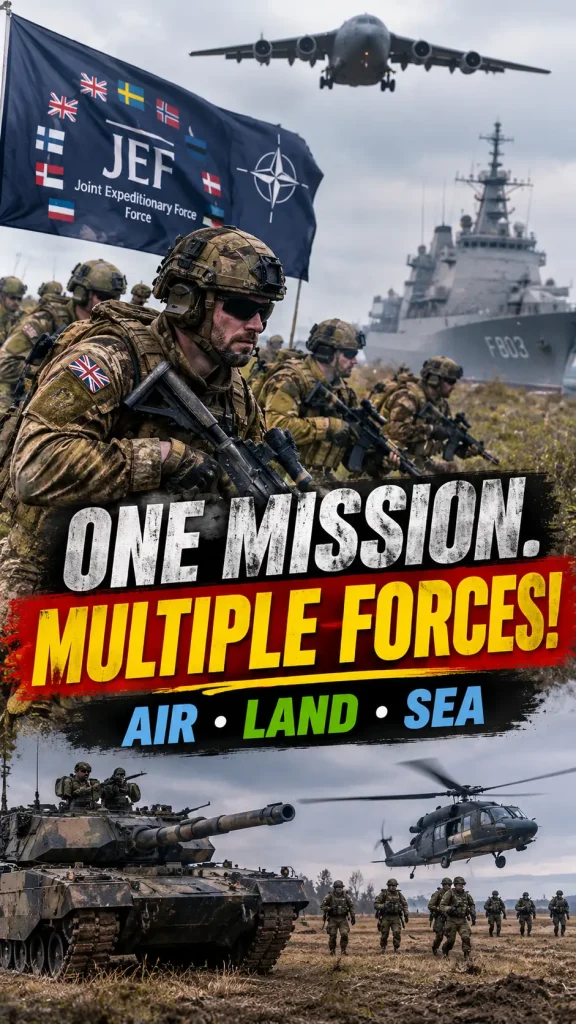
Train Together. Operate Together. Protect Together: Inside the JEF’s Mission to Defend Critical Infrastructure
Modern security is no longer limited to protecting borders, military bases, or the ships and aircraft that patrol national waters. Some of the most important assets connecting countries are far less visible: underwater communication cables, energy pipelines, offshore installations, shipping routes, and the networks that keep essential services running.
A disruption to these systems can affect communications, electricity, transportation, businesses, and everyday life. That is why protecting critical national infrastructure has become an increasingly important part of modern defence planning.
Across Northern Europe, the Joint Expeditionary Force (JEF) is strengthening cooperation between allied nations through multinational military training. Its central message is simple:
Train together. Operate together. Protect together.
What Is the Joint Expeditionary Force?
The Joint Expeditionary Force, commonly known as the JEF, is a UK-led partnership of ten Northern European countries. Its members are Denmark, Estonia, Finland, Iceland, Latvia, Lithuania, the Netherlands, Norway, Sweden, and the United Kingdom.
The partnership brings together military capabilities and personnel from participating nations so they can prepare for regional security challenges and respond more effectively when required.
The JEF is not a separate standing army, and it is not a replacement for NATO. Instead, it is designed to complement NATO by improving cooperation, readiness, and the ability of participating countries to work together.
Regular training allows military headquarters, personnel, ships, aircraft, and land forces to develop a shared understanding of how multinational operations should be coordinated.
Why Protecting Critical Infrastructure Matters
Modern societies depend on infrastructure that often operates beyond public view.
Undersea communication cables carry enormous volumes of international data. Energy pipelines and offshore facilities support essential supplies. Maritime routes connect ports, industries, and economies.
These systems are strategically important because damage or disruption can affect more than one country.
Threats may include physical damage, sabotage, suspicious maritime activity, cyber-related disruption, and other forms of hostile interference. Protecting these networks therefore requires awareness, cooperation, and the ability to respond across different operational environments.
The JEF has made the protection of critical undersea and offshore infrastructure an important part of its regional security activities.
Exercise Lion Protector 26: Allies Training Across Multiple Domains
One major example of this cooperation is Exercise Lion Protector 26.
According to the UK Ministry of Defence, JEF allies conducted the exercise across the North Atlantic, High North, and Baltic Sea. Its objectives included protecting critical national infrastructure, strengthening joint command and control, and countering emerging threats.
The exercise involved multinational activity across different environments, demonstrating why coordination between countries and military services is essential.
The exercise was not simply about individual units performing their own tasks. It was about ensuring that different forces could contribute to a coordinated multinational effort.
Read the UK Ministry of Defence announcement
Air, Land and Naval Forces Working Together
Each military service brings different capabilities to an operation.
Naval Forces: Protecting Maritime Routes
Naval forces help maintain awareness across important maritime areas. Warships can patrol sea routes, support maritime security activities, and contribute to the protection of strategically important infrastructure.
During the opening phase of Lion Protector 26, warships and aircraft from Denmark, Latvia, Sweden, and the United Kingdom escorted a Danish vessel carrying military equipment to Latvia.
This multinational maritime escort operation stretched along the Baltic Sea and tested the participating forces’ ability to coordinate across different domains.
Air Forces: Extending Awareness and Support
Aircraft provide capabilities that complement operations at sea and on land.
Air assets can support surveillance, transportation, coordination, and other military activities. Their ability to operate across large distances makes them an important part of multinational defence planning.
In a joint exercise, air and maritime units must share information and coordinate their activities so that commanders can maintain a common operational picture.
Land Forces: Securing and Supporting Operations
Land forces provide personnel and capabilities for operations that require a physical presence on the ground.
They may support the security of important facilities, conduct training alongside allied forces, and work with maritime and air units during complex multinational activities.
Lion Protector 26 also included Royal Marines training with Danish forces in the Faroe Islands. Activities included maritime interdictions, amphibious landings, and vertical ascent training.
The exercise marked the first Royal Marines exercise on the Faroe Islands since the Second World War, according to the UK Ministry of Defence.
Joint Command and Control: The Key to Coordination
Having capable forces is important, but multinational operations also require effective command and control.
Command and control allows military leaders to coordinate personnel, resources, and activities. It helps different units understand their responsibilities, communicate relevant information, and operate toward shared objectives.
This becomes particularly important when forces from several countries are involved.
Each participating nation has its own military structures, procedures, and responsibilities. Joint training helps personnel become familiar with working alongside their partners.
During Lion Protector 26, the UK’s Standing Joint Force Headquarters coordinated activity across the High North and Baltic Sea region. It also deployed north of the Arctic Circle in Norway to test its ability to command allied forces over distance and at speed.
This type of preparation helps build confidence in multinational coordination before a real crisis develops.
Why Training Together Makes a Difference
A military partnership becomes more effective when its members understand how to work together.
Training helps participating forces:
- Develop common procedures and expectations.
- Improve communication between military headquarters.
- Practise multinational command and control.
- Coordinate maritime, land, and air capabilities.
- Strengthen readiness for emerging security challenges.
- Build professional relationships between allied personnel.
These improvements are not achieved through equipment alone. They depend on people, preparation, communication, and trust.
When a situation develops, forces that have already trained together may be better prepared to understand their roles and coordinate an appropriate response.
Protecting More Than Military Assets
The importance of critical infrastructure extends far beyond the military.
Communication networks support families, companies, financial services, and government operations. Energy infrastructure supports homes, hospitals, transport systems, and industry. Maritime routes help maintain the movement of goods and essential supplies.
Protecting these systems is therefore connected directly to national resilience and public security.
The JEF’s cooperation on infrastructure protection reflects the growing recognition that security challenges can affect both military operations and civilian life.
The partnership also works alongside wider NATO efforts, supporting regional security without replacing the Alliance.
A Shared Commitment to Regional Security
The Joint Expeditionary Force demonstrates how countries can combine their capabilities while maintaining their own national responsibilities.
Through multinational exercises such as Lion Protector 26, participating nations can test procedures, improve coordination, and strengthen their ability to work together across the North Atlantic, High North, and Baltic region.
The objective is not simply to conduct a successful exercise. It is to build the relationships and readiness that may be needed when security challenges become more serious.
Modern infrastructure connects nations. Protecting it requires cooperation that crosses borders, services, and operational environments.
That is the meaning behind the message:
Train together. Operate together. Protect together.
Because when allied forces understand one another, communicate effectively, and prepare as a team, they strengthen their ability to protect the systems on which millions of people depend.
Editorial Note
This article discusses the Joint Expeditionary Force and Exercise Lion Protector 26 using publicly available information from the UK Ministry of Defence and official JEF sources. The supplied video is a cinematic military montage; its scenes should be treated as illustrative visuals rather than verified footage of every activity described above.