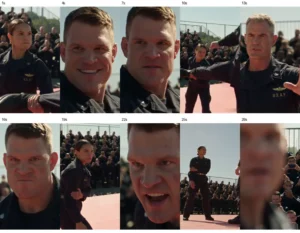
FIVE Hundred Soldiers Watched Avery Mitchell DEFEAT him
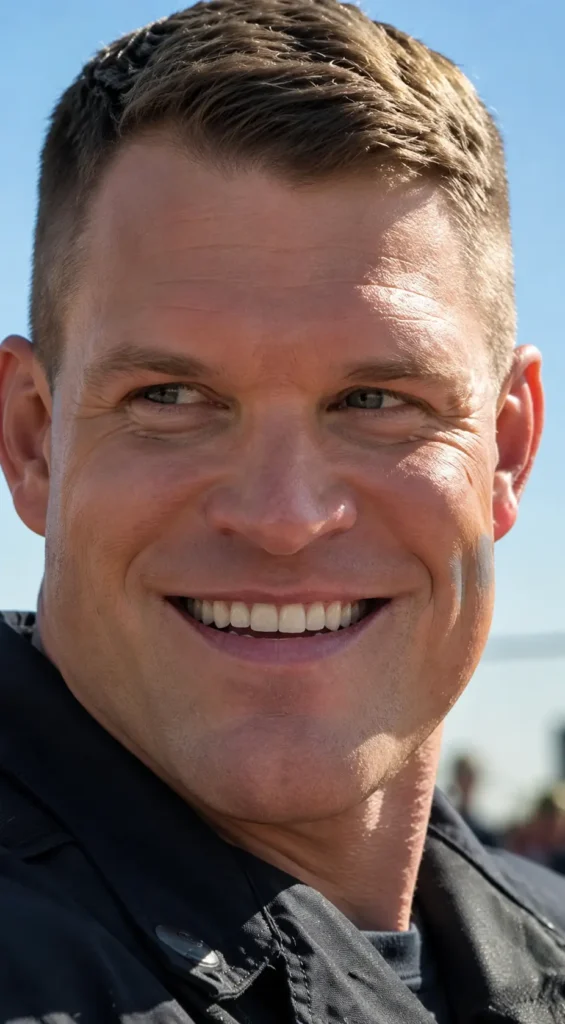
FIVE HUNDRED SOLDIERS WATCHED AVERY MITCHELL DEFEAT HIM. BUT THE REAL BATTLE WAS JUST BEGINNING
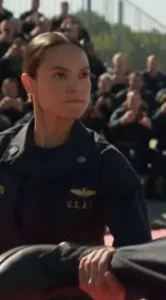
Chapter Two: The Moment Everything Changed
Briggs was still struggling to understand what had happened when I released his leg and stepped back.
For the first time since I had arrived at Fort Liberty, he wasn’t laughing.
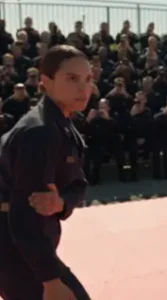
Five hundred soldiers stood around us. Hundreds of phones were recording, and every officer in the front row had seen the same thing: Sergeant Ryan Briggs had tried to injure me, and his own arrogance had put him on the ground.
But the match wasn’t over.
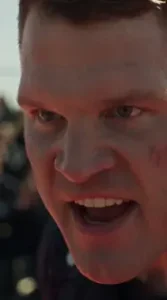
Briggs pushed himself upright, his face burning with humiliation.
“You’re going to regret that,” he muttered.
I raised my hands into a defensive position.
“Then you should probably make your next decision carefully.”
He charged.
This time, he abandoned every trace of patience. He swung wildly, trying to overwhelm me with his size and strength. I moved away from the first strike, redirected the second, and stepped outside his reach.
His next attack caught my injured ribs.
Pain shot through my side.
For an instant, the entire training field seemed to tilt.
Briggs saw me hesitate and smiled.
“That’s what happens when you pretend to be something you’re not.”
I could have answered him. I could have reminded him of every insult he had thrown at me during the previous four days.
Instead, I focused on my breathing.
I had trained for moments when pain made thinking difficult. I had learned that anger could destroy judgment faster than any opponent.
Briggs came forward again.
I changed direction, broke his balance, and brought him down onto the mat. He struggled to regain control, but I maintained my position without striking him unnecessarily.
The referee dropped beside us.
“Sergeant Briggs, submit!”
For several seconds, Briggs refused.
Then his hand struck the mat.
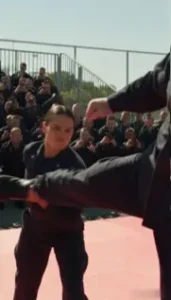
Once.
Twice.
Three times.
The referee separated us immediately.
“Avery Mitchell wins!”
The applause began slowly. One soldier stood, followed by another, until the sound spread through the crowd.
I didn’t raise my arms.
I didn’t celebrate.
I simply stepped away and allowed the medics to examine my injured ribs.
Across the mat, Briggs sat with his head lowered.
He had spent four days trying to prove that I didn’t belong among soldiers.
In less than four minutes, he had given five hundred witnesses a reason to question everything he had said.
But I soon discovered that winning the match was the easiest part of what awaited me.
Chapter Three: The Video That Reached Beyond the Base
By sunset, clips of the fight had escaped Fort Liberty.
By midnight, the footage was spreading across social media.
One video showed Briggs mocking me in the gym. Another captured his opening kick and the moment I caught his leg. A third showed him tapping the mat while the crowd watched.
The headlines came quickly.
A WOMAN SOLDIER STUNS HER MUCH LARGER OPPONENT.
FIVE HUNDRED WITNESSES WATCH A SERGEANT LEARN A LESSON.
MILITARY TRAINING MATCH SPARKS QUESTIONS ABOUT RESPECT AND ACCOUNTABILITY.
I wasn’t interested in becoming famous.
I had joined the military to serve, not to become a face on someone’s phone screen.
The following morning, Commander Daniel Hayes found me in the medical facility.
“Colonel Elaine Vance wants to speak with you,” he said.
“About the match?”
“About everything that happened before it.”
An hour later, I entered a conference room where Colonel Vance sat beside two senior officers. A folder lay open on the table.
Inside were statements from soldiers who had witnessed Briggs’s behavior, photographs of the items placed in my locker, and a written account of the incident that had nearly injured me.
Colonel Vance looked directly at me.
“Why didn’t you report these incidents earlier, Sergeant?”
I considered the question.
“Because I wanted to be judged by my work, ma’am. Not by how often I complained.”
She closed the folder.
“That is understandable. But it cannot become the standard for everyone else.”
For the first time, I felt that someone was addressing the real problem.
This wasn’t simply about whether I could defeat a larger opponent.
It was about whether a soldier could be humiliated, threatened, and deliberately provoked without anyone stepping forward.
Colonel Vance continued.
“The investigation will examine the conduct of everyone involved. Your performance yesterday doesn’t excuse misconduct, and your decision not to report it doesn’t make the misconduct acceptable.”
“Understood, ma’am.”
She paused.
“There’s another matter. Sergeant Briggs has made a statement.”
I waited.
“He claims he was instructed to test your capabilities.”
My eyes narrowed.
“Instructed by whom?”
“That is what we’re trying to establish.”
For the first time, I wondered whether Briggs’s behavior had been driven by more than his own prejudice.
Someone might have wanted to provoke me.
The question was why.
Chapter Four: The Unexpected Confession
Two days later, I received permission to speak with Briggs in a supervised interview room.
He looked different without an audience.
His usual confidence had disappeared. A medical dressing covered a cut near his eyebrow, and his hands remained folded on the table.
He didn’t look up when I entered.
“I suppose you’re here to enjoy this,” he said.
“No.”
“Then why come?”
“Because I want to know what you meant when you said someone told you to test me.”
He stared at the wall.
For a while, neither of us spoke.
Finally, he exhaled.
“Three weeks before the tournament, a senior officer contacted me. He asked questions about your assignment, your training history, and your previous deployments.”
“Who?”
“I don’t know his full name. I was given a number to call.”
“Why did he contact you?”
Briggs rubbed his forehead.
“He said the joint-training program needed to establish whether every participant could perform under pressure. He told me you had been given special treatment and that I should expose it.”
“And you decided to humiliate me?”
His jaw tightened.
“I thought I was doing what the Army expected.”
“That doesn’t answer my question.”
He finally met my eyes.
“No. It doesn’t.”
For the first time, his voice held no sarcasm.
He admitted that he had enjoyed the attention, the laughter, and the feeling that everyone considered him the strongest man in the room. The mysterious contact had given him an excuse to behave exactly as he wanted.
He had mistaken cruelty for authority.
Before I left, he handed the investigators a note containing the phone number and the date of the first call.
It wasn’t proof of a larger conspiracy, but it was enough to justify further questions.
At the doorway, Briggs spoke again.
“Mitchell.”
I turned.
“I was wrong about you.”
I held his gaze.
“You were wrong about more than me, Sergeant.”
He lowered his head.
“I know.”
I walked out without offering him forgiveness he hadn’t yet earned.
An apology could begin a change. It could not erase what had happened.
Chapter Five: The Officer Behind the Orders
The investigation moved beyond the tournament.
Investigators interviewed participants, reviewed training schedules, and examined the communications Briggs had voluntarily provided. They discovered that the person who had contacted him was connected to an administrative office involved in the joint-training program.
The officer, Lieutenant Colonel Marcus Reed, initially denied any improper involvement.
He claimed his instructions had been misunderstood.
But the evidence raised serious questions.
Reed had requested information about my assignment before I arrived at Fort Liberty. He had also encouraged several personnel to evaluate me under conditions that were not applied equally to other participants.
The investigators could not establish that he had ordered Briggs to injure me. However, they found enough inconsistencies to warrant a formal inquiry into his actions and the way the training program had been managed.
Colonel Vance called me into her office when the preliminary findings were complete.
“We are dealing with two separate issues,” she explained. “Briggs is responsible for his own conduct. Reed is responsible for his own decisions. Neither man gets to hide behind the other.”
“What happens now, ma’am?”
“The investigation continues. Appropriate disciplinary decisions will follow the findings.”
I nodded.
I had imagined that accountability would arrive as a dramatic moment, with someone making a speech and everyone finally understanding what had gone wrong.
Real accountability was different.
It meant interviews, records, difficult questions, and decisions that had to survive scrutiny long after the headlines disappeared.
It wasn’t as satisfying as a victory on a mat.
It was far more important.
Chapter Six: The Soldier Who Finally Spoke
A week after the tournament, I returned to the training field.
The same mats were laid out beneath the North Carolina sun. The same bleachers stood beside the field.
But the atmosphere had changed.
Soldiers were preparing for their next exercises, and instructors were reviewing the rules for controlled sparring. A new briefing had been scheduled on professional conduct, reporting procedures, and the responsibility to intervene when another service member was being mistreated.
As I crossed the field, a young corporal approached me.
It was Larson, the soldier who had laughed in the gym during my first morning.
“Sergeant Mitchell, may I speak with you?”
“Go ahead.”
He looked uncomfortable.
“I should have said something when Briggs started targeting you. I saw what he was doing, and I laughed because everyone else was laughing.”
I waited.
“I told myself it wasn’t my problem.”
“Was that true?”
“No, Sergeant.”
His answer came quietly, but he didn’t look away.
“I was afraid he’d turn on me.”
I understood the fear. I had seen it in the faces of several people during those four days.
But understanding fear didn’t make silence harmless.
“Next time,” I told him, “don’t wait for someone to win a fight before deciding what’s right.”
He nodded.
“I won’t.”
I couldn’t know whether he would keep that promise.
But I knew he had finally understood the question he should have asked himself from the beginning.
Courage wasn’t always standing on a mat in front of five hundred people.
Sometimes it was being the first person to say, “That’s enough,” when everyone else was laughing.
Chapter Seven: A Different Kind of Victory
Several weeks later, the tournament video was still circulating online, although the attention had begun to fade.
People continued debating whether I had proved that a smaller fighter could defeat a larger opponent. Others argued about military standards, leadership, and the treatment of women in combat-related assignments.
I read very little of it.
The footage showed a few minutes of my life. It couldn’t show the years of preparation behind those minutes, the discipline required to remain calm under pressure, or the choices I made after the cameras stopped recording.
I wasn’t proud because I had embarrassed Briggs.
I was proud because I had controlled myself when he tried to provoke me into losing control.
Briggs remained under review, and his future would be determined through the appropriate process. Reed’s actions were also subject to further investigation. Neither outcome was mine to decide.
One afternoon, Commander Hayes found me watching a new group of trainees practice on the field.
“You’ve changed the atmosphere here,” he said.
“I didn’t do it alone, sir.”
“No. You didn’t.”
He watched the trainees for a moment.
“Do you think the video made the difference?”
I considered the question.
“The video made people look. What they choose to do after looking is up to them.”
Hayes nodded.
“That’s a good answer.”
I smiled slightly.
“It’s the only one I’ve got.”
The next morning, I returned to the gym at five o’clock.
The room smelled of rubber mats, metal weights, and fresh coffee. Soldiers moved between the equipment, preparing for another day of training.
For a moment, I remembered my first morning there.
The laughter.
The pink plastic tiara.
Briggs calling me a little girl.
I had spent four days refusing to let his opinion define me. Now I understood something even more important: I didn’t need to prove my worth every time someone questioned it.
My duty was to train, serve, learn, and hold myself to the standards I had chosen.
I placed my notebook beside the bench and began my warm-up.
A young soldier approached.
“Sergeant Mitchell?”
I looked up.
“Yes?”
“Can I ask you something?”
“Of course.”
He hesitated.
“How did you stay calm when everyone was watching?”
I thought about the question before answering.
“I remembered why I was there. I wasn’t on that mat to win an argument. I was there to do my job.”
He nodded thoughtfully.
“And if someone tries to make you prove yourself?”
“Let your preparation speak for you. And if their behavior crosses a line, report it. You don’t have to accept disrespect to prove that you’re strong.”
The young soldier thanked me and returned to his training.
I picked up my notebook.
Outside, the morning sun was rising over Fort Liberty, illuminating the field where five hundred soldiers had once watched a man attempt to humiliate me.
They had witnessed a fight that day.
But the real lesson had nothing to do with size, strength, or the number of people watching.
It was about character.
Because the greatest victory isn’t making someone else look weak.
It’s refusing to let their weakness change who you are.
And that was the lesson Sergeant Ryan Briggs had learned too late.
THE END