How Military Working Dogs Support the U.S. Army
The partnership behind the uniform
Imagine arriving at a military installation before sunrise. While most people are thinking about the day ahead, a handler is already paying attention to a partner who cannot explain how he feels in words. Is the dog moving comfortably? Is he interested in his surroundings? Has anything changed since yesterday? These questions illustrate an often overlooked part of military working dog service: the responsibility begins long before an assignment and continues after it ends.
Military working dogs are not interchangeable pieces of equipment. Each is a living animal with individual strengths, limitations and needs. The handler must balance the requirements of the job with the welfare of the dog. That balance is central to understanding why these teams matter.
What military working dogs contribute
The U.S. military uses trained dogs for specialized duties that can include detection and security. A dog’s sense of smell offers a different way of gathering information from the environment. Where a person may notice a visual change, a dog may respond to an odor that is not apparent to the human observer.
The dog does not make every decision independently. A handler interprets behavior in context, communicates with other personnel and follows applicable procedures. A response from a dog is information to evaluate, not a guarantee that every possible concern has been identified.
This distinction matters because popular films sometimes portray military dogs as capable of solving almost any problem. In reality, their value comes from specific training, appropriate assignments and the coordinated work of the people around them. A well-trained team can contribute to a broader security effort without replacing other safeguards.
Why selection matters
A dog that enjoys playing fetch is not necessarily suited to military service. Working environments may be unfamiliar, noisy or physically demanding. A suitable candidate needs more than enthusiasm: health, temperament, motivation and the ability to learn all matter.
Different animals respond differently to new experiences. Some recover quickly after an unexpected sound, while others need more time. Some are highly motivated by play, while others respond better to different rewards. Trainers must evaluate the individual rather than assuming that every member of a particular breed will behave in the same way.
German Shepherds and Belgian Malinois are commonly associated with military dog work, but breed alone does not establish suitability. A healthy, confident animal with an appropriate temperament is more important than an impressive appearance. Dogs that do not meet the requirements of a particular role may have other suitable futures.
Training is a continuing responsibility
Training is not a single event that ends when a dog receives an assignment. Like people, animals need practice to maintain learned skills. Working teams must also adapt to changes in their surroundings and circumstances.
A handler learns how to communicate consistently and recognize the difference between a dog that is engaged and one that is distracted or uncomfortable. Rewards and clear expectations help build a predictable relationship. The details of training depend on the program and the dog’s assigned duties.
Good performance is not measured by how dramatic a training session looks. A calm, repeatable response can be far more useful than a spectacular display. The goal is dependable teamwork under appropriate conditions, supported by evaluation and ongoing care.
Readers interested in military careers should distinguish between general descriptions of dog training and official qualification requirements. Those requirements can change, and prospective applicants should consult current Army recruiting information rather than relying on social media claims.
A day in the life of a handler
There is no single daily schedule that applies to every military working dog team. Duties vary by location, assignment, training needs and the health of the animal. Nevertheless, much of the responsibility involves ordinary tasks that rarely appear in action movies.
Feeding, access to water, exercise, grooming and observation are important parts of animal care. Handlers may also maintain records, coordinate training and communicate with veterinary personnel. A change in appetite or movement can be meaningful even when the dog appears eager to work.
The routine requires patience. A handler cannot assume that yesterday’s performance guarantees today’s results. Paying attention to small changes helps the team respond appropriately when an animal needs rest or medical attention.
This is one reason the job involves more than a love of dogs. It requires professional judgment, consistency and a willingness to perform routine responsibilities even when nobody is watching.
Health and welfare come first
Working dogs can experience fatigue, injury and illness just as other dogs can. Their enthusiasm does not remove the need for appropriate rest or professional veterinary care. A dog may continue showing interest in activity even when a physical problem deserves attention.
Military veterinary professionals contribute to the health of working animals through preventive care, assessment and treatment. Handlers are important observers because they spend time with their dogs and may notice changes that are not immediately obvious to someone meeting the animal for the first time.
Environmental conditions also matter. Heat, cold and unfamiliar surfaces can affect an animal’s comfort and ability to work. Decisions about activity should take account of the individual dog and the applicable professional guidance.
Animal welfare is not separate from the effectiveness of the team. A healthy dog that receives appropriate care is better positioned to participate in training and assignments. Treating the animal as a partner rather than an expendable resource is both an ethical responsibility and a practical consideration.
The bond between dog and handler
A relationship develops through repeated experiences. The handler becomes familiar with the dog’s ordinary behavior, and the dog learns what to expect from the person responsible for its care. Trust is built through consistency rather than through a single heroic moment.
That does not mean every military dog remains with one handler throughout its life. Assignments and personnel can change. Dogs may need to work with different qualified people, and transitions require attention to the animal’s adjustment.
Stories about military dogs often focus on loyalty. That is understandable, but the human side of loyalty deserves equal attention. A handler demonstrates commitment by caring for the dog when it is tired, seeking help when something is wrong and respecting the animal’s limits.
The partnership is compelling precisely because the two participants experience the world differently. Each brings abilities the other does not possess, and effective communication helps them work together.
Retirement and a new chapter
A military working dog’s service eventually ends. Retirement decisions depend on individual circumstances, including health and suitability for continued duties. Some retired dogs may be eligible for adoption under applicable procedures.
A civilian home presents a different environment from a working kennel. An older dog may need time to become comfortable with household sounds, visitors or a new daily routine. Medical needs and temperament should be considered before adoption.
Former handlers may be interested in adopting a dog they knew during service, but adoption is not automatic. Interested readers should seek official guidance and avoid assuming that a particular animal is available.
The transition also reminds us that a working dog’s value does not end when its assignment ends. Retirement is an opportunity for appropriate care and companionship, not another performance test.
Separating fact from fiction
Military dog stories can be moving without being factual. A fictional rescue may explore courage and loyalty, while an informational article should distinguish documented responsibilities from invented scenes. Viral videos and dramatic captions are not reliable evidence that a particular incident occurred.
When reading about an alleged military dog rescue, look for a named source, a publication date and corroboration from credible reporting or official releases. Be cautious about claims that attribute human motives or precise thoughts to an animal. Behavior can be observed, but an animal cannot provide a verbal account of its intentions.
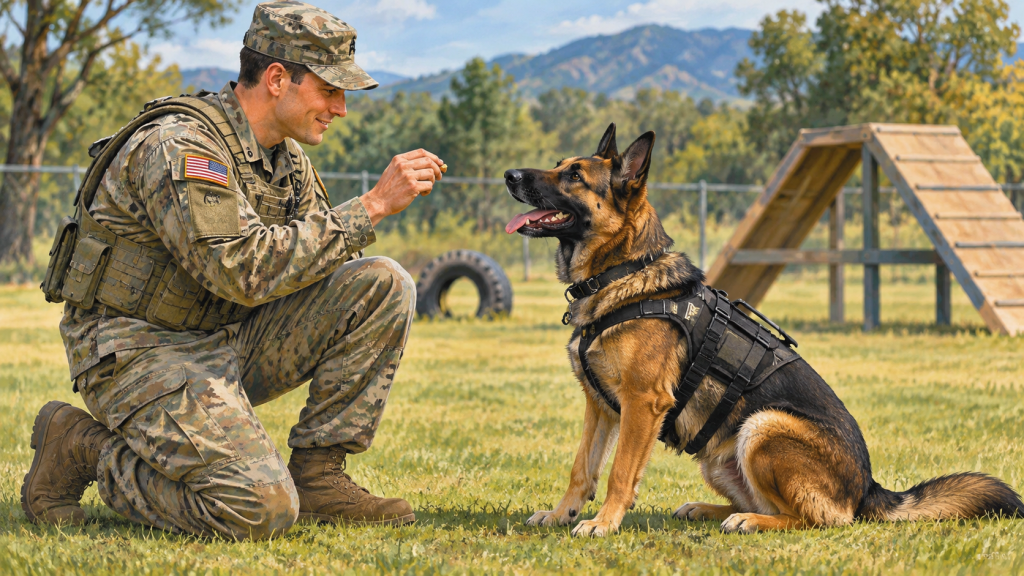
The same care applies to photographs. The featured image accompanying this article is an original generated illustration, not a documentary photograph of an identified Army team.
Where to learn more
For official information about military service, consult the U.S. Army and the Department of Defense. For recruiting and current career requirements, use GoArmy. These are starting points for checking current policies and opportunities rather than assuming that general descriptions apply to every assignment.
If you enjoy the emotional side of the human-animal bond, our original fictional story The Soldier Who Kept an Empty Dog Bowl for Seven Years explores remembrance and the challenge of welcoming a new companion.
The enduring lesson of military working dog service is not that dogs are invincible. It is that specialized abilities, responsible care and patient teamwork can create a partnership worth understanding.