The Soldier Who Kept an Empty Dog Bowl for Seven Years
Original fiction. The characters and events in this story are invented.
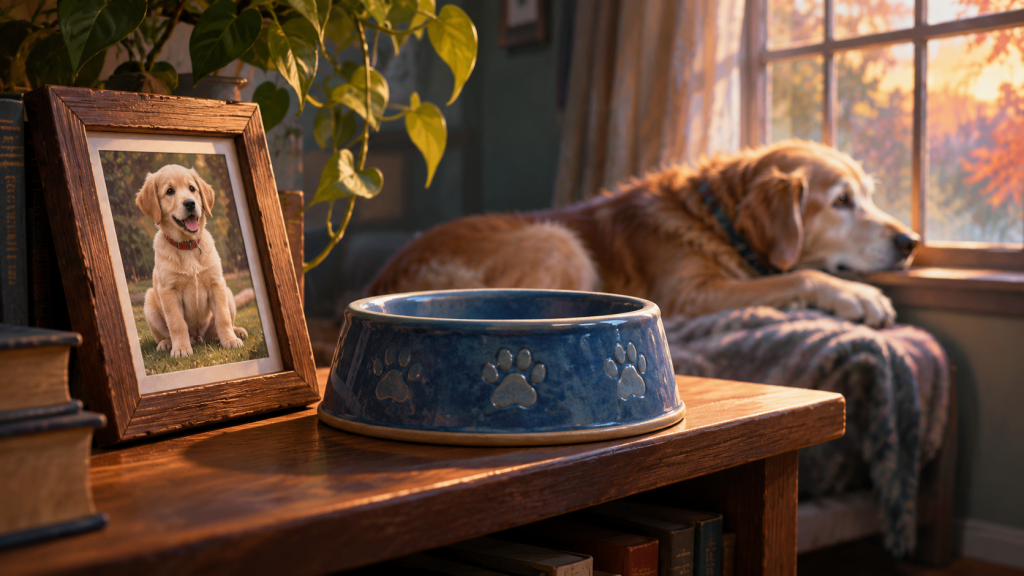
Every morning, Daniel Mercer filled a blue ceramic bowl with fresh water. Every evening, he emptied it. For seven years, no dog had touched it.
His neighbor, June, noticed the ritual while delivering a parcel. She asked whether he was expecting a visitor. Daniel smiled. “Not exactly.”
The letter beneath the bowl
June had lived next door for almost three years, yet she had never been inside Daniel’s kitchen. When he finally invited her in for coffee, she noticed a folded envelope beneath the bowl. Its edges had softened with age. Daniel moved it before she could read the writing.
She asked whether it was important. He said it was something he had been meaning to answer. June looked at the date on the corner of the envelope. It was seven years old.
Daniel changed the subject. He asked about her garden, her grandchildren and the weather forecast. June understood that the questions were a polite way of closing a door. She finished her coffee and left without asking again.
That night, a storm rolled through town. Daniel woke to the sound of rain against the windows and walked into the kitchen. He reached for the envelope, then stopped. He knew every sentence inside it. Reading it again would not change what had happened, but part of him still wished it might.
A promise that followed him home
During his Army service, Daniel had worked alongside a military dog named Cedar. Their partnership had taught him to pay attention to small things: the change in a dog’s posture, the patience required to build trust, the value of showing up even on difficult days.
After leaving the service, Daniel learned that Cedar had died following retirement. He kept the bowl as a reminder of their years together. At first, the ritual helped him remember. Over time, it became a way of avoiding the unfamiliar silence of his house.
The last conversation
Daniel remembered the afternoon he had said goodbye to Cedar. There had been no dramatic farewell, no crowd and no speech. He had simply sat beside the dog for a while, rubbing the familiar spot behind his ears. Another qualified handler would take responsibility for Cedar when Daniel left. Daniel knew that the dog would be cared for, but knowing that did not make the separation easy.
He had imagined visiting again someday. Work, distance and the ordinary complications of civilian life kept pushing that visit further into the future. Then the letter arrived. Cedar had retired and later died. The person who wrote it had included a photograph and a kind invitation to call.
Daniel never made that call. He was afraid that speaking about Cedar would make the loss feel final. Instead, he bought the blue bowl from a shop near his house. He filled it the next morning and began the routine that would follow him for seven years.
He did not believe Cedar would return. He knew the difference between memory and reality. But the bowl gave him a task that felt familiar, and familiarity was easier than deciding what to do with the empty hours.
The visitor at the shelter
One Saturday, June asked Daniel to help carry donated blankets to a local animal shelter. He agreed, expecting to stay ten minutes. In the last enclosure sat a gray-muzzled dog named Maple. She watched him without barking.
Daniel sat outside her enclosure. He did not call her or reach through the gate. After several minutes, Maple moved closer and lay down. The shelter volunteer explained that she was an older dog who needed a quiet home.
Daniel returned the following week. Then the week after that. He learned about her medical needs, her daily routine and the shelter’s adoption process. He wanted to be certain he could offer her the care she deserved, rather than simply fill an empty space in his life.
The name on the clipboard
On Daniel’s third visit, Maple was not in her usual enclosure. A handwritten card had been removed from the gate. He felt a sudden tightness in his chest and asked the volunteer where she had gone.
The volunteer explained that Maple was being examined by the shelter’s veterinarian. Another family had also expressed interest in adopting her. Daniel nodded, thanked her and walked outside. He sat in his truck for several minutes without starting the engine.
He had told himself that he was merely helping at the shelter. Now he realized how much he looked forward to seeing the old dog. He wanted to ask the volunteer to reserve Maple for him, but he knew that the decision had to be based on what was best for her, not what he feared losing.
The following Saturday, Maple was back. The other family had decided that their busy household was not the right fit for an older dog. The volunteer asked Daniel whether he would consider applying.
He took the paperwork home. At the kitchen table, he read every question carefully. Could he afford veterinary care? Could he arrange help if he became ill? Would he have enough time for walks and companionship? These were practical questions, and for the first time in years he found himself making practical plans for a future that included another living creature.
The call he had avoided
Before submitting the application, Daniel opened the old envelope. The photograph showed Cedar resting on a blanket, his muzzle grayer than Daniel remembered. On the back, someone had written that Cedar had enjoyed quiet afternoons in retirement.
Daniel found the phone number and called. A man answered. Daniel introduced himself and explained why he was calling after so long. There was a moment of silence, followed by a gentle laugh of recognition.
They talked about Cedar’s habits, his favorite toys and the way he used to fall asleep after a busy day. Daniel learned that Cedar had been comfortable and cared for in his final years. He had not needed Daniel to keep a bowl waiting for him.
When the call ended, Daniel sat quietly. He had expected the conversation to reopen a wound. Instead, it gave him a fuller picture of a life he had only known in part. He placed the photograph on the table and finished the adoption application.
A different kind of homecoming
When Maple finally came home, Daniel placed a new stainless steel bowl beside the old ceramic one. She drank, explored the kitchen and settled on a rug near the window.
That evening, Daniel washed Cedar’s bowl and placed it on a shelf beside a photograph. For the first time in seven years, he did not refill it.
June visited the next morning. Maple greeted her at the door. Daniel told her that he had once believed moving forward meant leaving something behind. Now he understood that remembering Cedar and caring for Maple could belong to the same life.
The old bowl stayed on the shelf. The new one needed filling twice a day. Daniel was grateful for both.
Learning to begin again
Maple did not transform Daniel’s life overnight. On her first evening she refused her dinner, and the next morning she hesitated at the front door. Daniel contacted the shelter for guidance and gave her time to adjust. He learned that her preferences were different from Cedar’s, and that was perfectly fine.
Some days they walked only as far as the corner. Other days Maple wanted to explore the park. Daniel began recognizing the neighbors he had previously passed without speaking. June sometimes joined them, bringing a thermos of coffee and stories about her garden.
Months later, Daniel returned to the shelter with another donation of blankets. He did not adopt every dog he met. Instead, he offered a few hours of his time and helped where he could. He discovered that remembering a companion could inspire new acts of care without requiring him to repeat the past.
One evening, as the light faded across the kitchen floor, Maple fell asleep beside his chair. Daniel looked at the blue bowl on the shelf. It was no longer a promise to wait. It was a reminder of a friendship that had taught him how to care, and of the quiet courage it had taken to begin again.
More about military working dogs
For factual background on the work and responsibilities of military dogs, read our article on how military working dogs support the U.S. Army.